
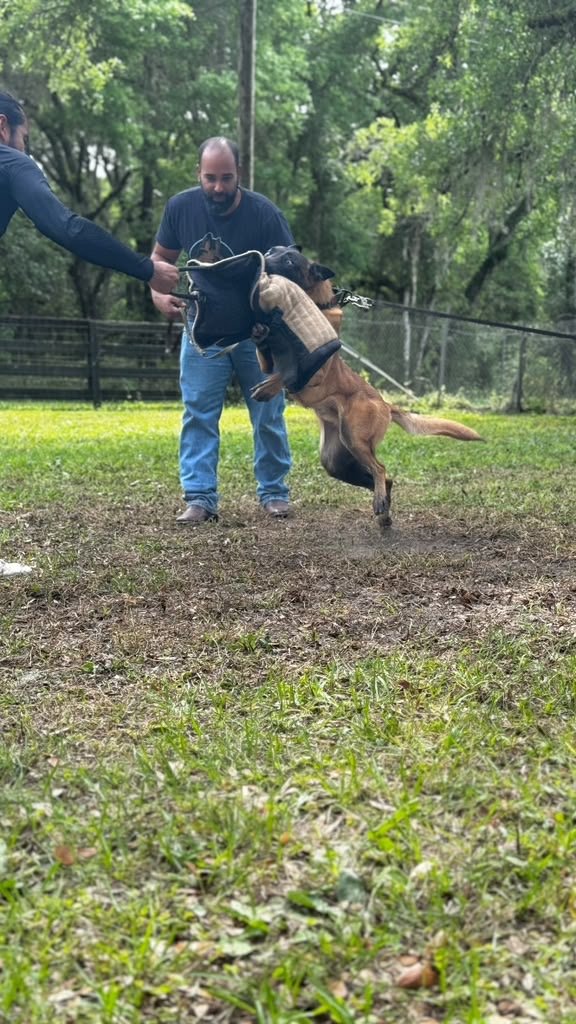
Why Does My Dog Bark and Lunge at Other Dogs on Walks?
You’re walking your dog when another dog appears and suddenly your dog is barking, pulling, growling, or lunging at the end of the leash. If this sounds familiar, your dog may be displaying leash reactivity — a common behavior concern that does not always mean a dog is aggressive.
By Jesús Ferreira · Underdog Training
You’re walking your dog through the neighborhood when another dog appears.
Suddenly, your dog starts barking, pulling, growling, or lunging at the end of the leash.
A walk that was peaceful a few seconds earlier becomes stressful.
If this sounds familiar, your dog may be displaying leash reactivity.
Leash reactivity is a common behavior concern, and it does not always mean a dog is aggressive.
Some dogs react because they are afraid. Others become frustrated because they want to approach another dog but cannot.
The important first step is understanding what may be causing the reaction.
For dog owners in Hudson, Shady Hills, and surrounding Pasco County communities, learning how to recognize triggers and manage walks safely can make a meaningful difference.
What Is Leash Reactivity in Dogs?
Leash reactivity describes an intense behavioral response to something a dog encounters while restrained.
Common triggers include:
- Other dogs
- Unfamiliar people
- Bicycles
- Cars
- Wildlife
- Loud noises
- Sudden movement
When another dog approaches, a leash-reactive dog may bark, growl, pull, jump, freeze, or lunge.
Some dogs react only when they are on a leash.
Others show similar behaviors behind fences, through windows, or in other situations where movement is restricted.
Leash reactivity describes what the dog does. It does not, by itself, explain the dog’s motivation.
Why Does My Dog Bark at Other Dogs During Walks?
There are several possible explanations.
Fear or Anxiety
Some dogs feel threatened when unfamiliar dogs approach. Barking and lunging may create distance from something they find frightening. If the other dog moves away, the reaction may become more likely to happen again.
Frustration
Some dogs enjoy meeting other dogs but become frustrated when a leash prevents them from approaching. This is sometimes called frustrated greeting. The dog may appear excited, but the intensity can still create unsafe interactions.
Previous Negative Experiences
A dog that has been frightened, chased, or attacked may become more sensitive to encounters with other dogs.
Limited Social Experience
Dogs that have not had enough positive, appropriate experiences around other dogs may find unfamiliar encounters difficult. However, not every reactive dog has a history of poor socialization.
Overarousal
Some dogs become highly excited by movement, sounds, and activity. Once arousal increases, it can become harder for them to respond to familiar cues.
Pain or Medical Problems
Pain and other medical conditions can contribute to changes in behavior. If reactivity appears suddenly or becomes noticeably worse, a veterinary examination is advisable.
Request a Training Evaluation.
If your dog barks, lunges, or reacts intensely on walks, a professional evaluation can identify the underlying cause and recommend an appropriate, humane training plan. The evaluation is a paid assessment, and the fee is credited toward a qualifying training package when you move forward.
Does Barking and Lunging Mean My Dog Is Aggressive?
Not necessarily.
Reactivity and aggression are related concepts, but they are not interchangeable.
A dog may bark and lunge because it wants another dog to move away.
Another dog may react because it wants to greet or play.
However, barking and lunging can also occur in situations involving a genuine risk of biting.
A dog’s motivation cannot be determined from one behavior alone.
Body language, history, distance, context, and previous incidents all matter.
If your dog has bitten or attempted to bite another dog or person, seek qualified professional assistance and use appropriate safety precautions.
Why Is My Dog Friendly Off Leash but Reactive on Leash?
A leash changes how dogs can move and interact.
When dogs are free to move, they may approach in curves, pause, sniff, or move away.
A leash can restrict these options.
Dogs walking directly toward one another on a narrow sidewalk may also have limited space.
For some dogs, this increases discomfort or frustration.
A dog that plays comfortably with familiar dogs may still struggle with unfamiliar dogs during leashed walks.
This does not mean the dog is being stubborn or deliberately misbehaving.
What Are the Early Signs of Leash Reactivity?
Barking and lunging are often the most noticeable signs, but subtler changes may happen first.
Watch for:
- Staring intensely at another dog
- Body stiffness
- Sudden freezing
- Ears changing position
- Tail becoming rigid
- Mouth closing
- Increased pulling
- Whining
- Difficulty responding to familiar cues
- Refusing food that the dog normally enjoys
These signs are not definitive on their own.
They should be interpreted together with the dog’s body language and situation.
Recognizing early changes can give you time to create distance before a reaction escalates.
What Is a Dog’s Reactivity Threshold?
A threshold is the point at which a dog becomes too distressed or excited to respond comfortably.
For example, your dog may notice another dog across a large field without barking. But when that dog moves closer, your dog may begin staring, pulling, or lunging.
The distance at which this happens can change.
Factors include:
- The other dog’s behavior
- The environment
- Previous stressful experiences
- Your dog’s physical condition
- Noise and movement
- How much space is available
Training generally works best when the dog can notice the trigger while remaining able to respond and learn.
Why Does Distance Matter in Reactive Dog Training?
Distance can reduce the intensity of an encounter.
If your dog begins reacting when another dog gets too close, moving farther away may help.
This is an important part of management.
You do not need to force your dog to remain near another dog until it stops barking.
Instead, you can create enough space for your dog to settle.
Over time, carefully structured training may help the dog feel more comfortable at closer distances.
Progress should be gradual and based on the dog’s behavior.
What Should I Do When My Dog Starts Barking at Another Dog?
Focus on safety and creating distance.
Stay Calm
Avoid shouting or adding unnecessary tension.
Move Away
Cross the street, turn around, or move behind a visual barrier if it is safe.
Avoid Forced Greetings
Do not require your dog to approach or interact with the other dog.
Use Familiar Cues
If your dog can still respond, a previously practiced cue may help redirect attention.
Reward Calm Engagement
When your dog notices another dog without escalating, reward appropriate behavior.
End the Encounter if Necessary
Sometimes the best choice is simply to leave the situation.
If your dog is already highly distressed, increasing distance is generally more useful than demanding obedience.
Should I Pull or Jerk the Leash When My Dog Lunges?
Avoid harsh leash corrections.
The American Veterinary Society of Animal Behavior recommends reward-based methods for dog training and behavior modification.
Aversive techniques may increase fear, anxiety, or other welfare concerns.
A leash should help keep the dog and others safe.
It should not be used to inflict pain or intimidation.
If you are struggling to maintain physical control, seek professional help with safe handling and equipment selection.
Can Treats Help a Reactive Dog?
Yes, food rewards can be useful when incorporated into a structured behavior modification plan.
One approach is counterconditioning.
This involves pairing the appearance of another dog with something your dog enjoys, while maintaining enough distance to prevent overwhelming reactions.
For example:
- Your dog notices another dog at a comfortable distance.
- You provide a high-value reward.
- The other dog moves away.
- You stop delivering the reward.
Over repeated, carefully managed sessions, the goal is to help change the dog’s emotional response.
This process should be adjusted to the individual dog.
Do not force a frightened dog into close encounters simply to offer treats.
What Is Desensitization?
Desensitization involves exposing a dog to a trigger at an intensity the dog can handle.
For leash reactivity, this may mean beginning at a considerable distance from another dog.
The distance is gradually adjusted only when the dog remains comfortable.
The process should not involve repeatedly overwhelming the dog.
Progress is not always linear.
Some dogs need additional distance or simpler exercises after a difficult experience.
What Is Counterconditioning?
Counterconditioning aims to change how a dog feels about a trigger.
For example, a dog that is uncomfortable around unfamiliar dogs may begin to associate seeing them at a safe distance with enjoyable experiences.
Counterconditioning and desensitization are often used together.
They should be applied thoughtfully, especially when fear or aggression is involved.
Can You Teach a Reactive Dog to Look at You?
Yes.
Teaching an attention cue can help a dog disengage from distractions.
Begin in a quiet environment without other dogs.
Reward the dog for responding to its name or another simple cue.
Once the behavior is reliable, practice in slightly more distracting environments.
Eventually, the cue may be useful during walks.
However, asking for attention does not replace addressing the dog’s underlying emotional response.
If the dog is already over threshold, move away rather than repeatedly demanding eye contact.
Is a U-Turn Useful for Reactive Dogs?
A practiced U-turn can help you move away from an approaching dog.
Teach the movement in a quiet area first.
Use a simple cue, turn with your dog, and reward following you.
Practice until the movement feels familiar.
During a walk, you can use the cue before the approaching dog gets too close.
This is a management skill, not a complete treatment for reactivity.
Should Reactive Dogs Meet Other Dogs on Leash?
Not necessarily.
Many reactive dogs benefit from avoiding unnecessary on-leash greetings while training is underway.
Forced interactions can increase stress or frustration.
The goal is not to make every dog greet every other dog.
A dog can have successful walks without meeting unfamiliar dogs.
If controlled social interactions are appropriate, they should be planned with attention to both dogs’ behavior and safety.
Should I Take My Reactive Dog to a Dog Park?
A crowded dog park is often a poor environment for working on leash reactivity.
Uncontrolled approaches and unpredictable interactions can overwhelm some dogs.
A quieter setting with manageable distances is generally more suitable for structured training.
Dog parks should not be used as a way to force a fearful or reactive dog to become social.
What Equipment Can Help With Leash Reactivity?
Equipment should be selected for comfort, safety, and appropriate handling.
Options may include:
Well-Fitted Harness
A properly fitted harness can help distribute pressure and support safer handling.
Standard Leash
A fixed-length leash can provide predictable control.
Secure Identification
Make sure your dog has appropriate identification and secure equipment.
Basket Muzzle
For dogs with a bite risk, a properly fitted basket muzzle may be part of a professional safety plan. Muzzle training should be introduced gradually and positively. A muzzle does not replace distance management, supervision, or behavior modification.
Avoid equipment intended to cause pain, fear, or intimidation.
Ask a qualified professional for help choosing equipment appropriate for your dog.
How Long Does It Take to Improve Leash Reactivity?
There is no universal timeline.
Progress depends on:
- The cause of the behavior
- How long it has been occurring
- The dog’s previous experiences
- The frequency and intensity of triggers
- The dog’s health
- The consistency of training
- The environment
- The owner’s ability to manage encounters
Some dogs show improvement relatively quickly.
Others require ongoing training and management.
The goal should be meaningful, sustainable progress rather than a promise of immediate or permanent elimination.
Can an Older Dog Learn to Be Less Reactive?
Yes.
Adult and senior dogs can learn new behaviors.
However, training should account for the dog’s health, mobility, and previous experiences.
If an older dog develops sudden reactivity, veterinary evaluation is particularly important.
Pain, sensory changes, and other medical conditions may affect behavior.
Can a Puppy Become Leash Reactive?
Yes.
Puppies may react to unfamiliar dogs because of fear, excitement, frustration, or limited experience.
Appropriate socialization involves positive, controlled exposure.
It does not mean forcing puppies to interact with every dog they encounter.
Early support may help prevent some problems from becoming more established.
Can Lack of Exercise Cause Reactivity?
Exercise needs vary by dog.
Insufficient physical activity or mental enrichment can contribute to frustration and difficulty settling in some dogs.
However, reactivity is not always caused by a lack of exercise.
A tired dog can still feel frightened or threatened by another dog.
Training should address the underlying behavior rather than relying only on increased activity.
Does Obedience Training Fix Leash Reactivity?
Obedience skills can help owners communicate with their dogs.
Useful skills may include:
- Responding to a name
- Walking on a loose leash
- Following a U-turn cue
- Moving away from distractions
- Settling in quieter environments
However, obedience alone may not change fear or frustration.
Behavior modification may also be necessary.
The training plan should reflect the individual dog’s needs.
For help with pulling specifically, read our Week 1 article: How to Stop Your Dog From Pulling on the Leash, or explore our leash-pulling training service.
When Should You Hire a Dog Trainer for Reactivity?
Professional guidance may be especially helpful when:
- Your dog reacts frequently.
- You struggle to maintain control.
- Walks have become difficult to manage.
- Your dog is becoming more reactive.
- The dog has a history of biting.
- You are unsure what triggers the behavior.
- Your attempts to improve the behavior have not worked.
Choose a professional who can explain their methods and prioritize safety and humane handling.
For severe aggression, bite incidents, or complicated behavior problems, a veterinarian or veterinary behaviorist may also be needed.
Schedule a Dog Training Evaluation.
If walks have become stressful or unpredictable, a professional evaluation can identify why your dog reacts and recommend an appropriate, humane training plan. The evaluation is a paid assessment, and the fee is credited toward a qualifying training package when you move forward.
Looking for a dog trainer in Hudson, FL? Contact Underdog Training at (813) 458-1823.
What Happens During a Dog Training Evaluation?
A useful evaluation may include discussion of:
- The dog’s age and history
- Previous training
- Medical concerns
- Common triggers
- Body language
- Walking equipment
- Household routines
- Safety concerns
- Owner goals
A responsible evaluation should not require provoking a dangerous reaction simply to demonstrate the behavior.
The goal is to understand the problem and develop an appropriate plan.
Ask Underdog Training about its current evaluation process and available training programs.
Can Board-and-Train Help a Reactive Dog?
Board-and-train programs may provide structured opportunities to practice selected skills.
However, reactivity often depends on the dog’s emotional response and everyday environment.
Owner participation and follow-through remain important.
A dog that behaves differently in a training facility may still need help applying those skills at home and during neighborhood walks.
Ask what training methods are used, how progress is measured, and how owners are taught to continue the work.
Underdog Training offers structured training programs, subject to current availability and individual suitability. No particular program can be guaranteed to resolve aggression or reactivity.
Dog Reactivity Training in Hudson, Florida
Underdog Training is a dog training business based in Hudson, Florida, serving dog owners in nearby Pasco County communities.
Trainer Jesús Ferreira works with owners seeking help with obedience and behavior concerns.
The business has described services involving:
- Dog obedience training
- Leash manners
- Behavior modification
- Training evaluations
- Structured training programs
- Boarding with training, where appropriate and available
Program availability and details should be confirmed directly with the business.
If your dog barks, pulls, or lunges during walks, contact Underdog Training to discuss whether an evaluation is appropriate.
(813) 458-1823
Frequently Asked Questions About Leash Reactivity
Why does my dog bark and lunge at other dogs?
Possible causes include fear, frustration, excitement, previous negative experiences, or difficulty coping with close encounters.
Is a leash-reactive dog aggressive?
Not always. Some reactive dogs are fearful or frustrated. However, reactivity can involve a bite risk and should be evaluated carefully.
Can leash reactivity be trained?
Many dogs can make progress with appropriate management and behavior modification. Results vary by dog and circumstances.
Should I let my reactive dog greet other dogs?
Avoid forced greetings. Controlled interactions should be based on the dog’s comfort and safety.
Should I punish my dog for barking at other dogs?
Aversive punishment is not recommended by the American Veterinary Society of Animal Behavior. Humane, reward-based approaches are preferred.
Can treats help with leash reactivity?
Yes. Rewards may be used in structured counterconditioning and training exercises at a manageable distance from triggers.
What should I do if my dog lunges on a walk?
Prioritize safety, create distance, avoid confrontation, and use previously practiced management skills when possible.
Is leash reactivity the same as leash pulling?
No. Pulling may occur for many reasons. Reactivity involves a heightened response to a particular trigger.
How long does dog reactivity training take?
The timeline varies. Progress depends on the dog, triggers, history, environment, and training plan.
Where can I find a dog trainer for leash reactivity in Hudson, FL?
Underdog Training is based in Hudson, Florida. Call (813) 458-1823 to discuss your dog’s behavior and request information about evaluations.
Make Walks More Manageable With Professional Guidance
A dog that barks or lunges at other dogs may be experiencing fear, frustration, or another form of emotional arousal.
Understanding the cause is an important step toward safer walks.
With appropriate management, humane training, and professional guidance when needed, many dogs can learn more manageable responses to their triggers.
If you’re looking for dog training in Hudson, Shady Hills, or nearby Pasco County communities, contact Underdog Training to discuss your dog’s needs. You can also browse more answers in our dog training FAQs.
(813) 458-1823
The references below support the training methods and guidance discussed in this article. They do not imply an endorsement of Underdog Training.
- 1.ASPCA. “Managing and Training Leash-Reactive Dogs.”
Explains causes of leash reactivity, management strategies, thresholds, desensitization, and counterconditioning.
- 2.American Veterinary Society of Animal Behavior. “Humane Dog Training Position Statement.”
Evidence-based recommendations supporting reward-based training and avoiding aversive methods.
- 3.SPCA of Texas. “Dog Reactivity: Pet Care Tips.”
Practical guidance on distance management, equipment, rewards, and professional support.
- 4.Better Business Bureau. “Underdog Training Business Profile.”
Public business profile for Underdog Training in Hudson, FL.
- 5.Underdog Training. Official Website.
Link to the verified homepage and contact information for Underdog Training in Hudson, FL.
Start With a Professional Dog Training Evaluation.
Daily walks should be manageable and enjoyable. If leash pulling, distractions, or reactivity are making walks difficult, a structured training plan may help. Serving Hudson, Shady Hills, and nearby Pasco County communities.
The evaluation is a paid professional assessment — the fee is credited toward a qualifying training package when you move forward. No results are guaranteed, and not every dog fits every program; your evaluation determines the right path.
Let’s talk about your dog.
Send us a quick message and we’ll get back to you within one business day. No obligation, no pressure — just real help from a trainer with 8+ years on the job.
Send us a message
Tell us what you need — it takes less than two minutes.
We call you back
Within one business day, to talk through your dog and your goals.
Get a real plan
A clear, honest recommendation for your dog — no pressure, no sales pitch.